
Finding the Language for My Compositional Thinking
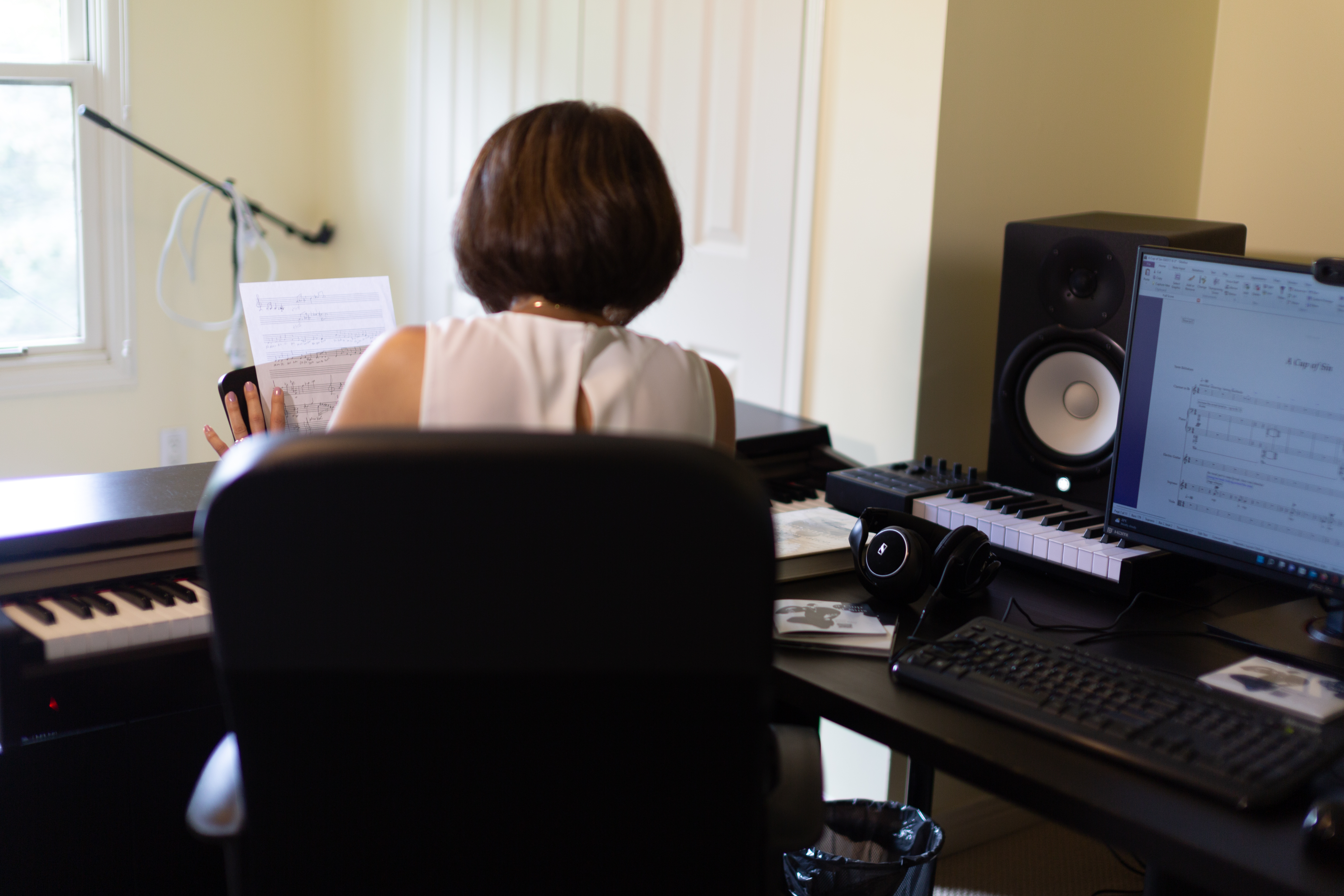
Lately, I have been thinking about what connects my different compositions and artistic projects. They explore different subjects and take different forms, yet I have started to recognize something they share: the way I approach composition.
I don't think my creative process has fundamentally changed. I am simply beginning to find the words to describe something I have been doing for years.
My ideas often begin with an emotion, a question, or a story that stays with me. I usually spend a lot of time researching, thinking, listening, and asking questions before I begin composing. I may not know exactly what the finished work will become, but I have a sense of what I want to explore. As I work with different artistic materials, new questions and possibilities emerge, sometimes taking the work in directions I hadn't anticipated.
Looking back at *Sabzeh* (2025), an immersive installation inspired by Omid Fallahazad's short story of the same name, I can see this process more clearly.
The story brought together two elements: hand weaving and the growth of sprouts. As we researched the roots of sprouts and the knots of Persian carpets, we discovered an interesting connection between their structures. The roots of sprouts intertwine as they grow, while individual knots come together to create the intricate patterns of a carpet. Although these are different processes, both led us to think about how individual elements connect and contribute to something larger.
This discovery made us think about how beauty, strength, and complexity can emerge through these relationships. We began asking how this understanding could shape the installation. How could sound, movement, fibre art, video, and physical space relate to one another? How could these connections help us explore the story and its themes of resilience, unity, and renewal?
These questions guided our artistic decisions and helped shape the work. What began as an investigation of two seemingly different elements gradually became a way of thinking about the installation as a whole.
Reflecting on this experience has helped me recognize something about my creative practice. I often find myself searching for relationships between things that may not seem connected at first. I explore how sounds, materials, stories, movements, and experiences might influence one another, and what new possibilities might emerge from bringing them together.
I am also realizing that composition is not only about expressing an idea I already have. It is part of how I explore and deepen my understanding of that idea. Research informs my artistic decisions, but the act of composing also leads to discoveries that I might not have reached through research alone.
Many of my projects grow from personal experiences, stories, or events in the world around me that I feel a need to understand or respond to. These experiences motivate me to ask questions and explore them through art. Along the way, I learn from the materials I work with and from the people I collaborate with. The creative process can change my own understanding, while the finished work may invite audiences to make their own connections and discoveries.
Perhaps this is what I have been trying to put into words: **for me, compositional thinking is a way of exploring relationships, asking questions, and discovering possibilities through artistic creation.**
I am still learning to recognize the different ways this thinking shapes my work. But finding the language to describe it has helped me see connections between projects that once seemed quite different.
And I am curious to see where this understanding will take me next.
Photo Credits: Aida Sabeti
- Log in to post comments