Journal

A collection of reflections on composition, artistic practice, teaching, and the questions that continue to shape my work.

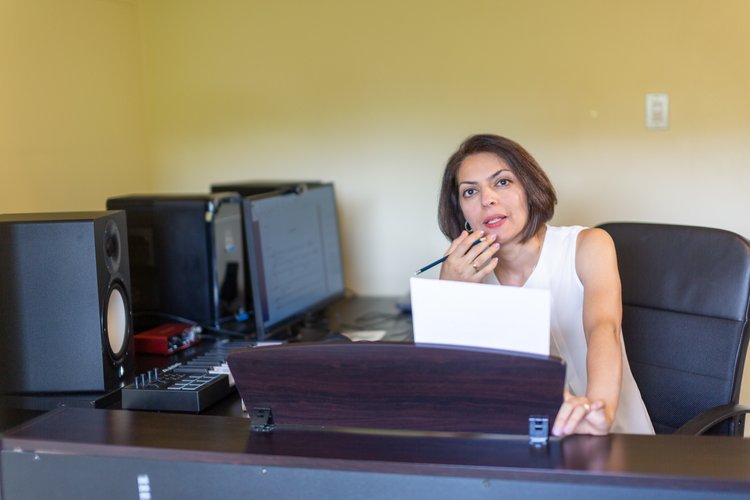
I'm currently writing a piece for solo violin and electronics, and I've been thinking about how acoustic and electronic ideas can come together without losing what makes each of them distinct.

I've recorded some violin sounds and effects that I'm now integrating into the electronics. That gives the two parts a natural point of connection, but I'm interested in going beyond simply sharing sounds. The challenge is finding threads that can run through both—so that even when they move in different directions, they still feel as though they belong to the same musical world.

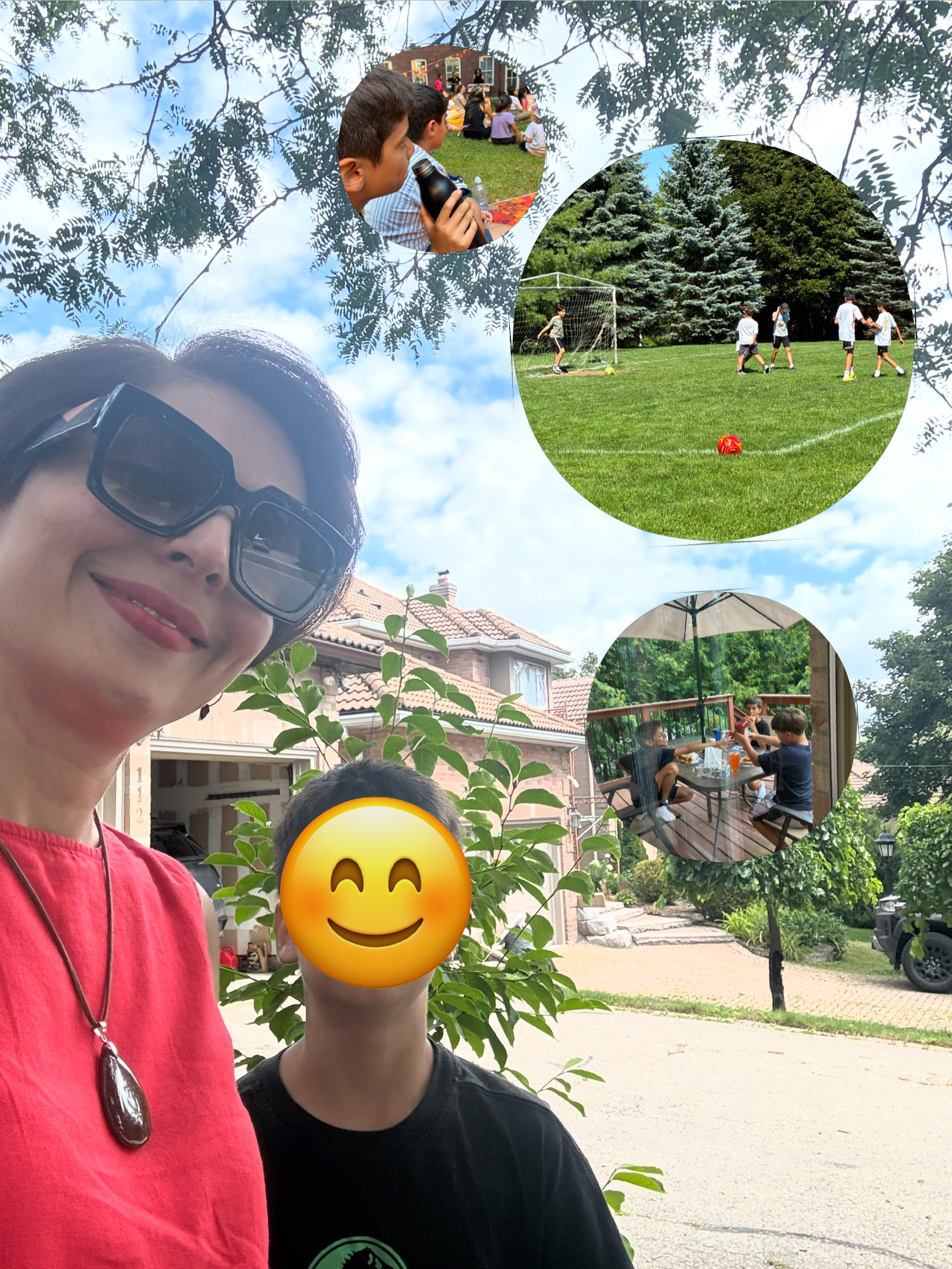
Every summer, I seem to forget how difficult it is to find time to create.

During the school year, everyone has a schedule. My son goes to school, the day has a structure, and within that structure I have time that is completely mine.

Summer is different.

I don't want my son spending the whole day in front of a screen, which means I also have to find alternatives: plan things for us to do together, arrange time with friends, or sometimes he simply sits beside me and starts talking. A lot of talking. 😅

During the pandemic, I wrote a few pieces without really knowing what I wanted them to be.

No clear idea. No story. No question I was trying to explore. I just started composing and hoped that, somewhere along the way, the piece would tell me where it wanted to go.

Sometimes that works.

And sometimes… it really doesn't. 

I kept finding new ideas, but none of them gave the piece a direction. It felt like wandering around and somehow always ending up in the same place. So naturally, I kept composing. There was a deadline to meet.

Before It Reaches the Surface

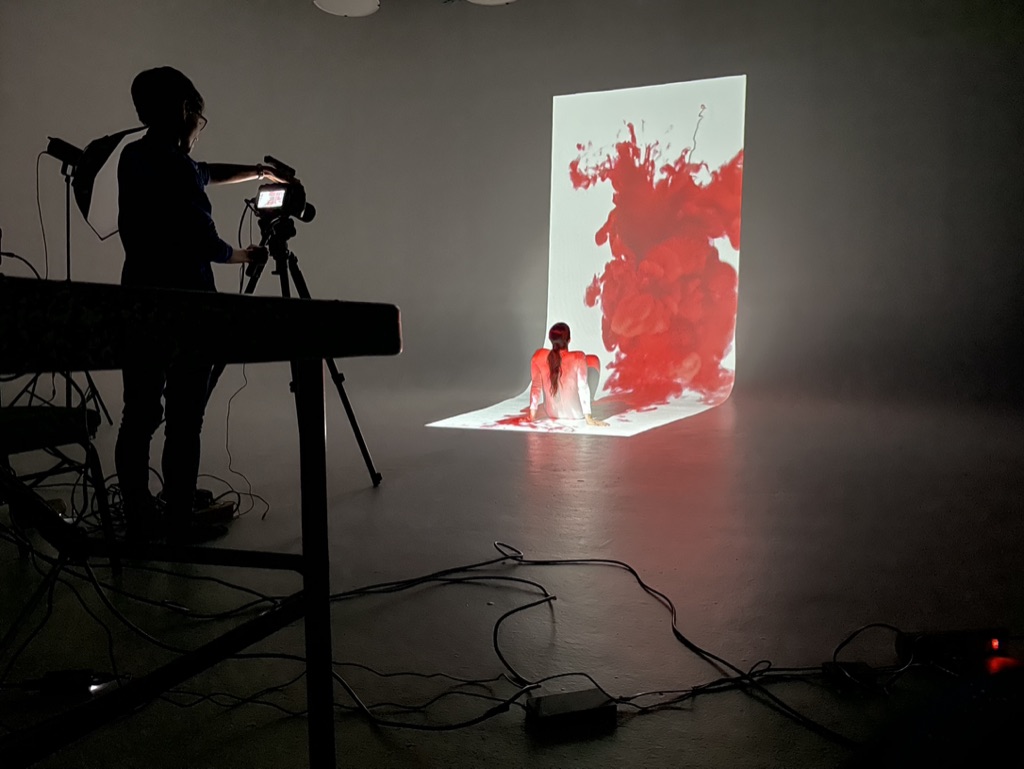
I started working on Silent, a multimedia work inspired by Forough Farrokhzad's poem The Wind-Up Doll, sometime around 2021. It was commissioned by Charsu Ensemble with support from the Canada Council for the Arts.

I was initially drawn to the poem's unsettling portrayal of a woman who can remain silent, perform the life expected of her, and gradually lose something of herself in the process.

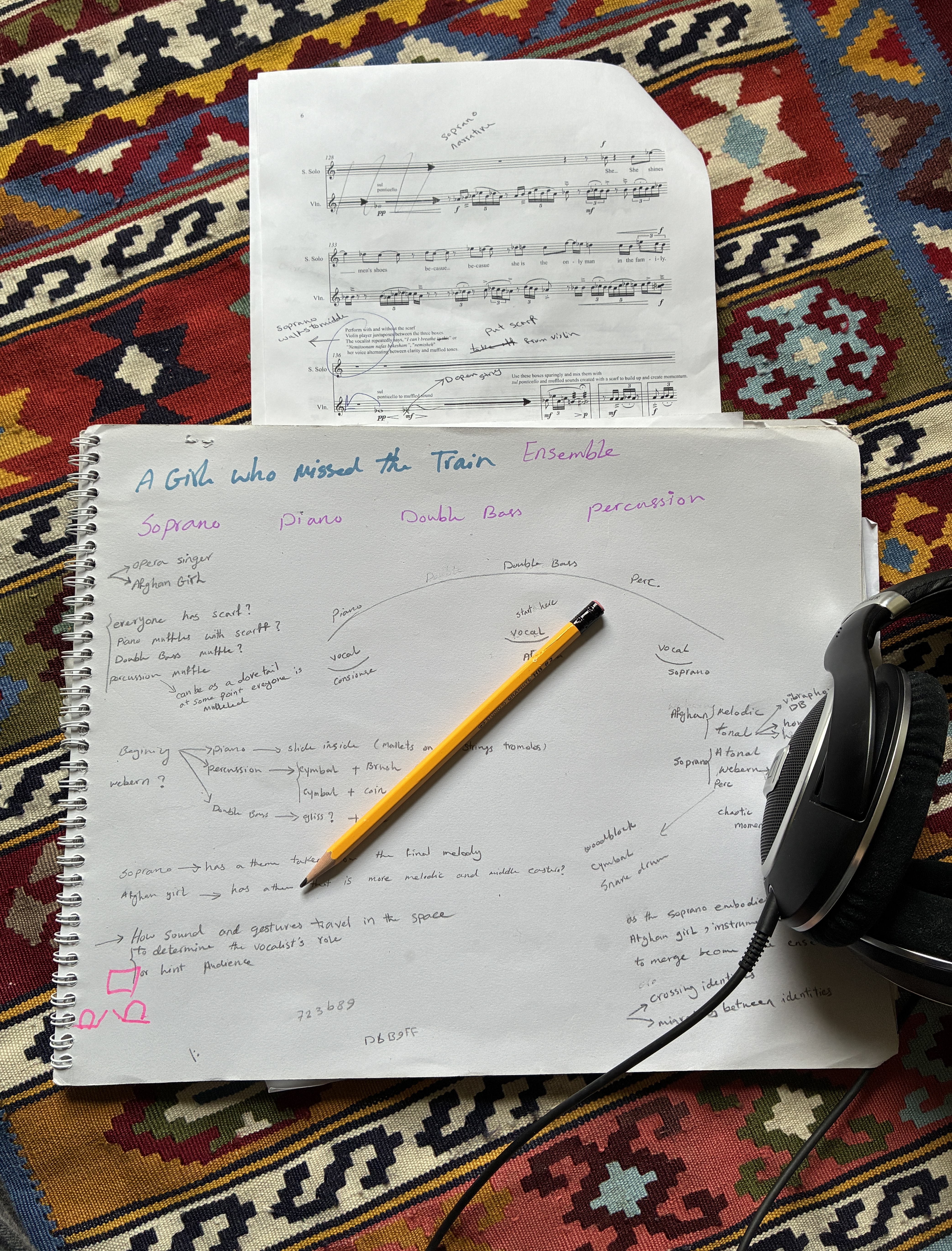
The original version of A Girl Who Missed the Train was written for soprano and violin.

Arranging the piece for soprano, piano, double bass, and percussion changed the compositional question entirely.

Some passages are fully written.

Others exist inside boxes—musical ideas that performers can repeat, shorten, extend, or even leave behind. Those spaces were intentional. I wanted to leave room for the performers to bring their own musical instincts, respond to one another, and shape certain moments according to the performance, the space, and the audience.

There is a strange moment in every project that I have come to appreciate.

For weeks, sometimes months, a piece exists almost entirely in my own imagination. I live with it, question it, rewrite it, and gradually learn what it's trying to become.

Then the score leaves my studio.

From that moment on, the piece no longer belongs only to me.

I don't send a score because it's finished. I send it because it has reached the point where it needs other ears.

Every piece seems to reject certain ideas.

Not because they're bad.

They just don't belong.

While I'm composing, I often come across musical ideas I really love, only to realize they don't belong in the piece I'm writing. It's tempting to hold on to every one of them.

But over the years, I've come to think that every composition has ideas that belong only to itself. Composing is about discovering what this piece needs—and having the patience to let everything else go.

Sometimes I wonder where those unused ideas end up.

Some of the most meaningful parts of my artistic life have grown through relationships—with mentors, friends, performers, students, and collaborators. The projects I value most are rarely created alone; they grow through collaboration and shared experiences.

This week, one of my piano duos was performed by two wonderful pianists for children and families attending a summer music camp.

As I kept thinking about growing sprouts, I realized I didn't want the idea of growth to exist only within the installation. I wanted it to shape the way the music itself came into being.

The composition began with three seeds: recordings of hand weaving, the sounds of growing sprouts, and a Persian lullaby.

When I began creating Sabzeh, another image from Omid Fallahazad's story stayed with me: growing sprouts.

Before a seed becomes a sprout, it first has to let go of what it was. It breaks open. What appears to be an ending is actually the beginning of a transformation.

When you look closely, not every sprout grows at the same pace. Some reach toward the light quickly. Others remain small. Some never grow at all.

Yet none of them diminish the beauty of the whole.