
Deciding What Not to Decide
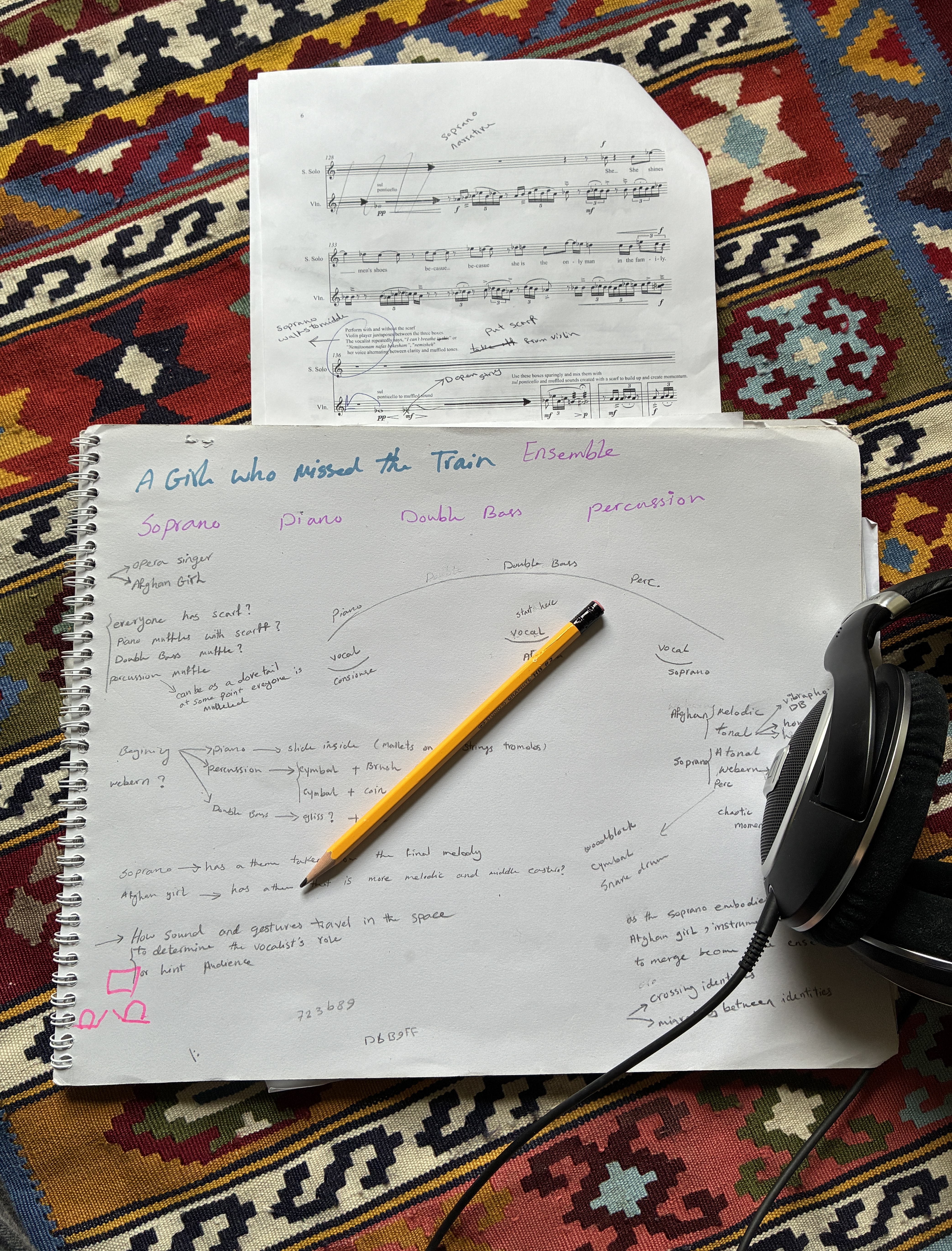
The original version of A Girl Who Missed the Train was written for soprano and violin.
Arranging the piece for soprano, piano, double bass, and percussion changed the compositional question entirely.
Some passages are fully written.
Others exist inside boxes—musical ideas that performers can repeat, shorten, extend, or even leave behind. Those spaces were intentional. I wanted to leave room for the performers to bring their own musical instincts, respond to one another, and shape certain moments according to the performance, the space, and the audience.
Giving freedom to two performers is one thing.
Giving that same freedom to four, while allowing the music to remain cohesive, is something else entirely.
The challenge wasn't writing more notes.
It was deciding which decisions still belonged to the performers.
I'm still discovering where that balance lives.
To me, that's one of the most interesting parts of composing.
Not deciding everything.
But deciding what doesn't need to be decided.
- Log in to post comments