
Before It Reaches the Surface
Before It Reaches the Surface
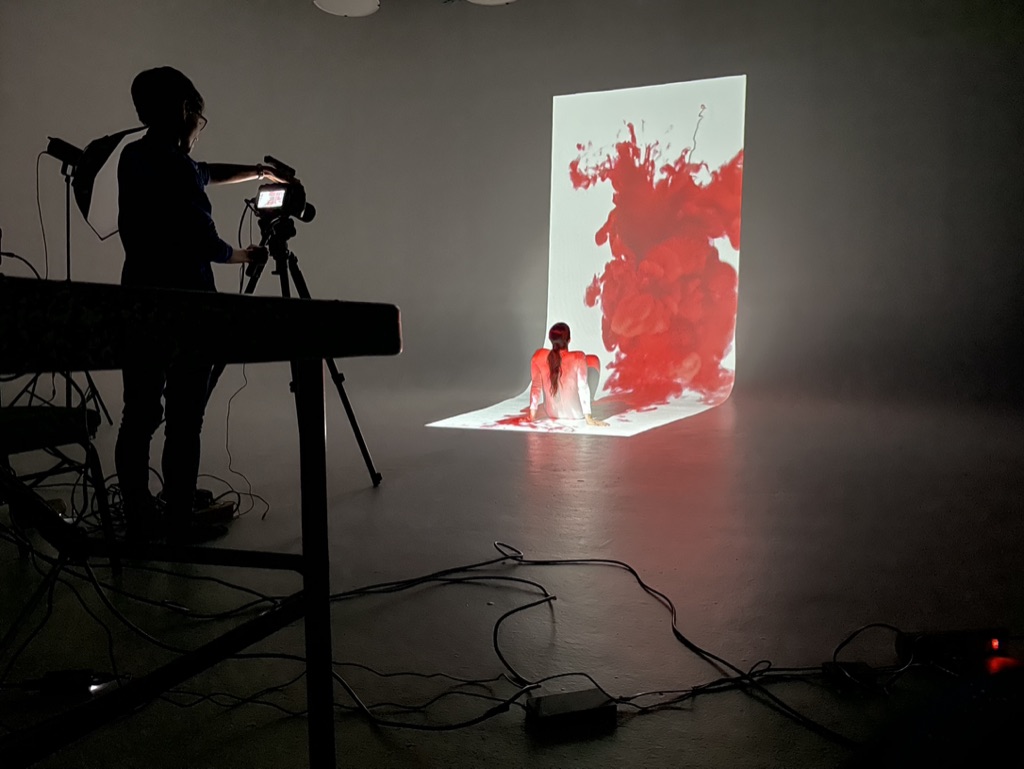
I started working on Silent, a multimedia work inspired by Forough Farrokhzad's poem The Wind-Up Doll, sometime around 2021. It was commissioned by Charsu Ensemble with support from the Canada Council for the Arts.
I was initially drawn to the poem's unsettling portrayal of a woman who can remain silent, perform the life expected of her, and gradually lose something of herself in the process.
But as I began talking with the artists involved in the project, I realized that silence is everywhere. It isn't particular to women. Many of us have chosen to remain silent in situations we know aren't right—at work, at home, at school, and in our relationships.
I became interested in a simple question: Why do we remain silent even when we know we shouldn't?
Perhaps because speaking up is rarely simple. There are relationships, consequences, fears, responsibilities, and circumstances that can make breaking the silence much more difficult than it appears from the outside.
So we began documenting our own experiences. When had we chosen to remain silent? Why? And once we recognized those moments, were we ready to speak?
Often, the answer was no.
But I began to wonder whether recognizing our own silence was itself a first step. Maybe we aren't always ready to break it. But we can begin by noticing when we are choosing it.
That idea became central to Silent.
Then, after the brutal killing of Mahsa Amini in 2022 and as Iranians took to the streets, with Woman, Life, Freedom becoming a collective voice for something that had been carried quietly for generations, I found myself thinking about Forough's poem and Silent differently.
The piece hadn't changed.
But the world around it had.
Forough Farrokhzad wrote The Wind-Up Doll decades before I encountered it. I found my own way into those questions through Silent, and then watched those questions take on a different meaning as long-held assumptions began to be challenged in ways that felt impossible to ignore.
It made me wonder whether artists sometimes notice what a society is already carrying before it reaches the surface and finds a collective voice.
Maybe creating simply asks us to pay attention—to the things that trouble us, the questions we can't leave alone, and the stories from the past that suddenly feel present.
I often think about Maxine Greene's idea of “wide-awakeness” and the role art can play in helping us step outside the routines of everyday life, notice what we have stopped noticing, and imagine that things could be different.
Maybe noticing is where change begins.
- Log in to post comments